
Compound Stabilization.
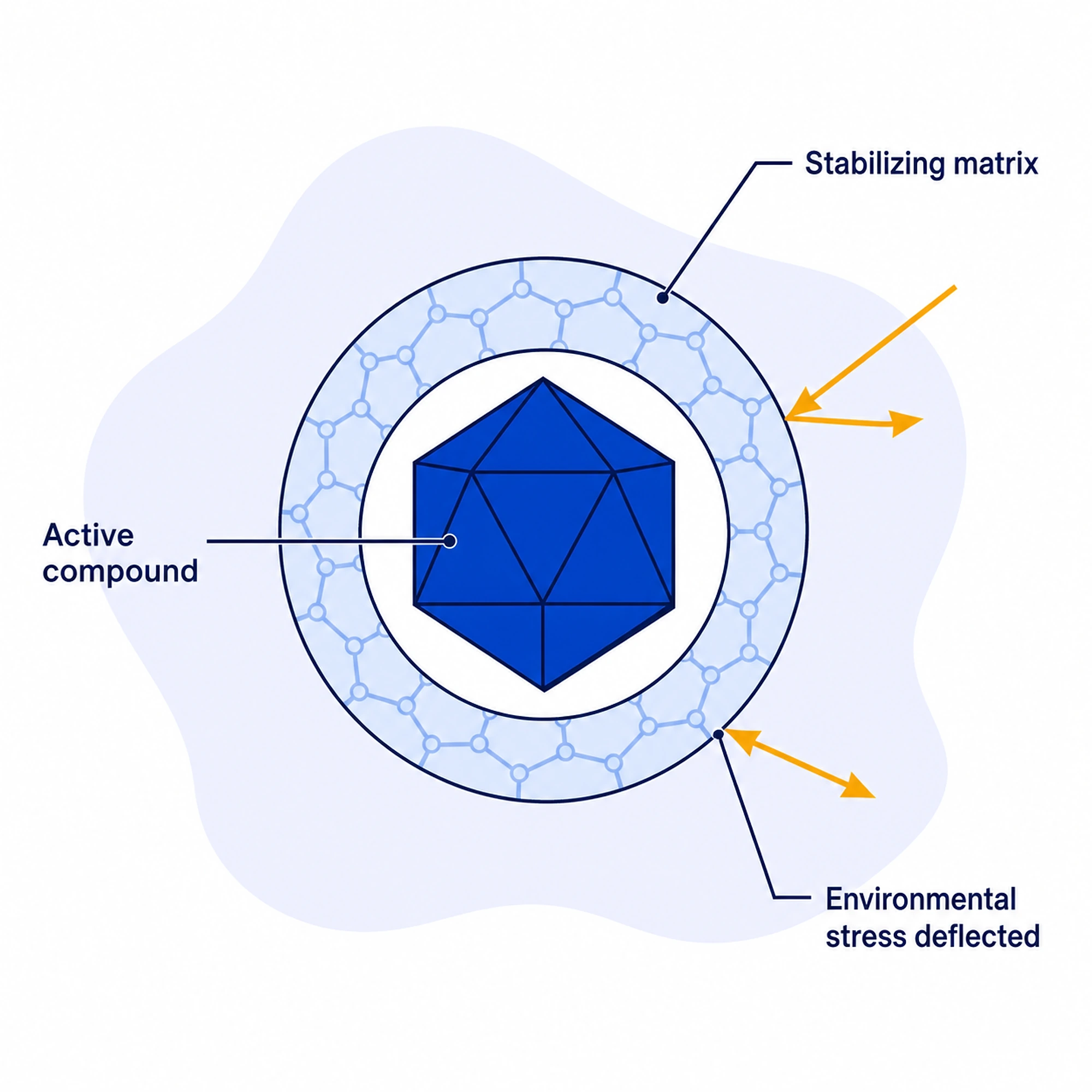
Engine One. Most phytocompounds degrade the moment they leave the plant. The stabilization layer preserves molecular structure against oxidation, light, heat, and moisture so the compound profile partners actually need remains intact.
Why stabilization
Stability is the prerequisite for everything downstream.
Without a stabilized compound, formulation design becomes guesswork. Release profiles cannot hold. Analytical data becomes unreliable. The stabilization layer is the foundation that makes precision delivery possible, and it licenses independently of Engine Two.
The clock starts the moment the compound is isolated.
Conventional packaging slows degradation. It does not solve it. The stabilization layer defends against the four pathways that erode product credibility and limit commercial viability.

Oxidation Defense
Atmospheric oxygen rapidly attacks sensitive botanical actives and reduces measurable potency. The encapsulation matrix creates a barrier that limits oxidative contact at the molecular level.
Photodegradation Shielding
Light exposure accelerates molecular breakdown well before a formulation reaches commercial shelf life. The stabilization layer attenuates photolytic energy before it reaches the active.

Thermal Resilience
Storage and transit temperature shifts alter compound profiles and create dose uncertainty. The matrix maintains structural protection across realistic temperature windows.

pH Degradation
Shifts in pH during processing, storage, or biological transit can destabilize active compounds and alter their therapeutic profile. The stabilization layer buffers against pH-driven degradation to preserve molecular function across environments.
A barrier between the active and everything that wants to break it down.
We engineer the formulation environment around the compound so oxidative, photolytic, thermal, and hydrolytic pressures are addressed as a system rather than in isolation.
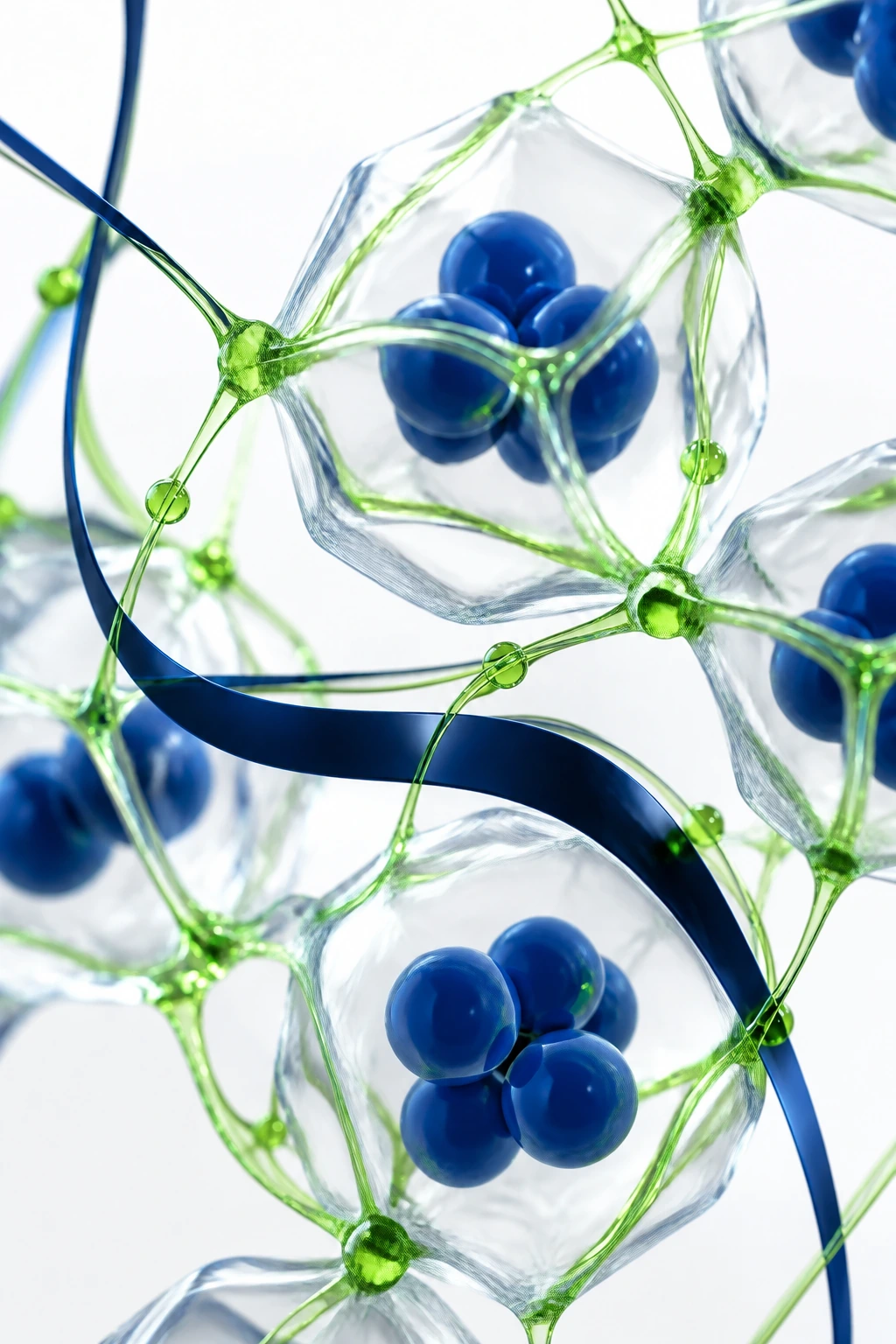
The matrix creates a more protective microenvironment around the active compound and supports more defensible shelf-life positioning.
Concentration targets stay more stable across storage windows instead of eroding unpredictably.
Better stability upstream produces stronger consistency in analytical release and downstream formulation behavior.
The platform is intended to support a range of phytochemical families without reinventing the core logic every time.
Stabilization questions
It protects against oxidation, light exposure, temperature variation, pH sensitivity, and enzymatic activity, the primary factors that lead to degradation, loss of potency, and batch-to-batch variability.
Once compound integrity is lost upstream, downstream formulation and dosing become less reliable and harder to defend. Instability fundamentally alters both product integrity and biological performance.
Delivery inefficiencies are often a consequence of instability. Degraded molecules exhibit inconsistent absorption, biological transport becomes unpredictable, and effective dose is reduced. Stability resolves these at the source.